






Image series 11 / 2026: Gladiator Fights
Man Against Man
8 March 2026
|
By: Bettina Pfleging


In ancient Rome, gladiators were specialised professional fighters who usually fought against other gladiators in front of an audience in arenas. They got their name from the legionnaires’ sword, the ‘gladius’. They underwent extreme training in gladiator schools, where they also received nutritional and medical care. The fights in the arena – man against man, to the death – were the finale of an all-day event.
Original Roman gladiator equipment from the gladiator school in Pompeii, as well as excavations and finds from the Limes in Bavaria and Hesse, transport visitors to the world of Roman gladiators in this exhibition.
„gladiators – heroes of the colosseum“
21 November 2025 until 3 May 2026, Archäologische Staatssammlung, München

Casque de gladiateur, 1st century, bronze, 380 mm, Paris; RMN Musée Du Louvre, Réunion des musées nationaux

Terracotta statuette of a gladiator, 1st–2nd century A.D., Terracotta, 15,9 × 6,9 × 4,8 cm, New York; Metropolitan Museum of Art

Adriaen de Vries. Gladiator, 1605, Bronze, Stahl, Rauchfirnis, Höhe: 18,9 cm, Wien; Kunstakademie Düsseldorf

Cornelis Bloemaert. Naakte gladiator, 1636, paperengraving, 361 × 232 mm, Amsterdam; Rijksmuseum Collection, Amsterdam
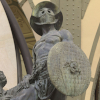
Jean Léon Gérôme. Gérôme exécutant les Gladiateurs., Ausschnitt, contemporary period from 1789 until 1914, cire-perdue castingbronze, 3600 × 1820 mm, Paris; RMN Musée d’Orsay, Réunion des musées nationaux

Domenico Morelli. The Gladiator, Ausschnitt, 19th century, Oil on panel, 33,7 × 21,3 cm, Chicago; The Art Institute of Chicago
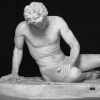
Dying Gladiator, Ausschnitt, 1904, Gips, 96 × 185 × 89 cm, Kopenhagen; Statens Museum for Kunst

Louis Fleckenstein. Fallen Gladiator, Ausschnitt, 1909–1924, Gelatin silver print, 27,2 × 17,8 cm; Getty Museum, J. Paul Getty Trust
